
🌙 The Voice from Nowhere
In 1960, pop music was a battlefield of styles — from Elvis Presley’s swagger to Paul Anka’s charm, from teen idols to doo-wop harmonies.
And then, out of the radio’s static, came a voice that didn’t sound like anything else.
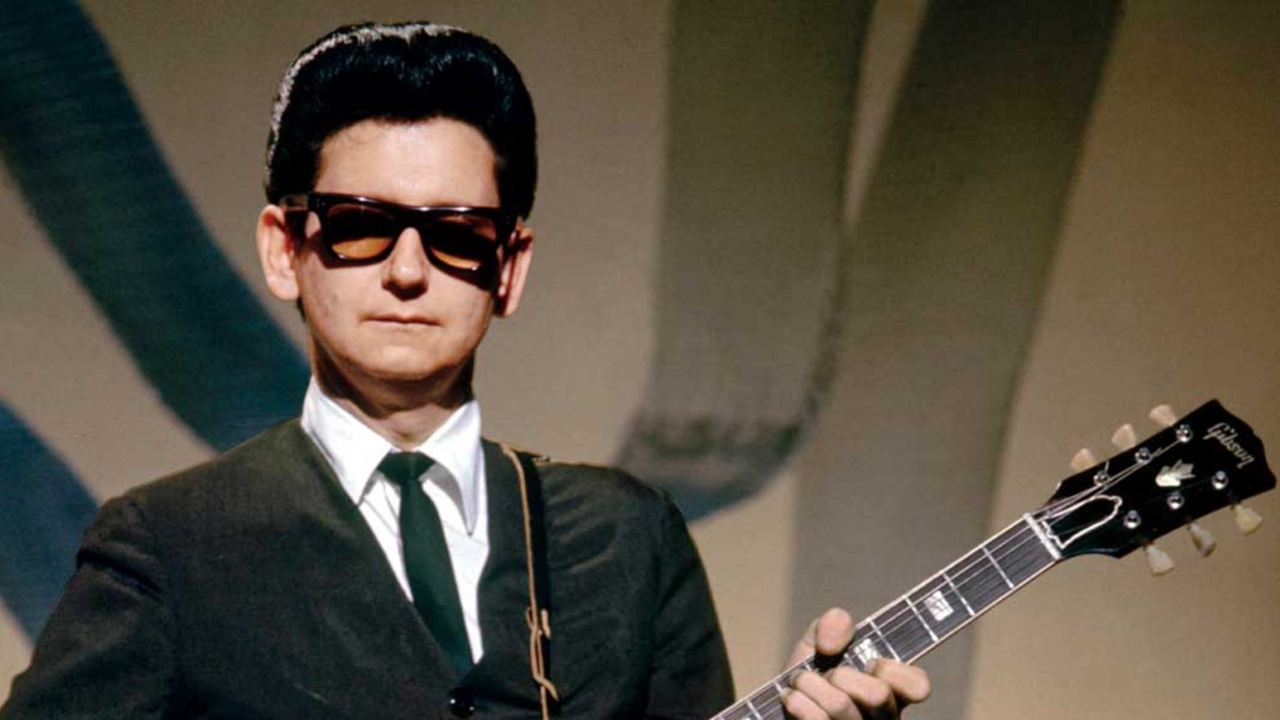
It was Roy Orbison — pale, shy, hidden behind thick dark glasses — singing not with swagger, but with sorrow.
When “Only the Lonely” hit the airwaves, people didn’t just listen; they stopped.
That trembling falsetto, that soaring cry of heartbreak — it wasn’t rock’n’roll rebellion, it was vulnerability on fire.
The song, released on May 9 1960 in the U.S. and later that year in the U.K., marked the moment Roy Orbison crossed from a struggling songwriter into a global phenomenon.
By October 20, 1960, it officially became his first U.K. chart hit, reaching No. 1 — a turning point that would forever change the shape of emotional pop music.
🎧 A Song That Almost Wasn’t His
“Only the Lonely” almost slipped through his hands.
Orbison co-wrote it with his friend Joe Melson, and the two initially offered it to Elvis Presley and The Everly Brothers.
Both passed.
So Roy decided to sing it himself — a move that would rewrite his destiny.
In the studio at Monument Records, producer Fred Foster helped Orbison craft something cinematic.
Instead of driving drums or heavy guitar, the song swelled like a miniature opera — layered vocals, lush strings, and that unforgettable falsetto soaring above it all.
It was pop stripped of its charm and drenched in loneliness.
Where others sang about love, Orbison sang about loss — with sincerity so deep it hurt.
🕶 The Birth of the Lonely Star
When the song became a hit, Orbison’s image solidified almost by accident.
He wasn’t Elvis — no leather jacket, no hips, no grin.
He stood still on stage, wearing black, hiding behind dark sunglasses because of his poor eyesight.
And yet, that look became his armor — the mysterious man in black, the poet of heartbreak, the singer who made pain sound like beauty.
Audiences felt like he was singing for them, to them — not as an idol, but as a companion in sadness.
💔 Beyond the Charts
“Only the Lonely” sold millions and shot to the top across the world.
But its real power lay not in numbers — it was in the emotional revolution it sparked.
At a time when male pop stars were expected to be tough or charming, Orbison dared to sound fragile.
He didn’t hide his heartbreak. He embraced it.
His songs were filled with longing, dreams, and tragedy — and yet they made listeners feel seen, not alone.
In an era built on rhythm, Orbison brought melody back to the center of the human heart.
🌍 Across the Ocean – The British Awakening
For British audiences, “Only the Lonely” was an introduction to an American sound unlike any other.
When it climbed the U.K. charts in October 1960, Orbison became one of the first rock singers admired as a vocalist, not just a performer.
Young musicians — including a certain group from Liverpool — listened closely.
The Beatles would later call Orbison one of their earliest inspirations.
When they toured together in 1963, John Lennon said, “We all tried to sing like Roy Orbison.”
That’s how deep his impact ran: before the British Invasion conquered America, America’s loneliest voice had already conquered Britain.
⚡ A Blueprint for the Ballad
“Only the Lonely” laid the foundation for Orbison’s golden run —
Running Scared, Crying, In Dreams, and eventually Oh, Pretty Woman.
Each song elevated pop balladry into something cinematic, with arcs of emotion that felt like mini symphonies.
He proved that a rock song could have the depth of opera, the intimacy of confession, and the soul of poetry.
Bruce Springsteen would later say, “Roy Orbison’s voice could make grown men cry, even if they didn’t know why.”
Bob Dylan called him “the greatest singer in the world.”
🌑 The Echo of Eternity
Roy Orbison’s life was marked by tragedy — personal losses that mirrored the very songs he sang.
But through every heartbreak, his music became a sanctuary for millions.
When “Only the Lonely” turned him into a star in 1960, it wasn’t just a hit.
It was a promise — that music could hold sorrow without breaking.
Even decades later, when Orbison joined the Traveling Wilburys with Dylan, Harrison, and Petty, that haunting beauty remained.
He never lost that voice that trembled on the edge between strength and surrender.
Because that’s what made him timeless.
Roy Orbison didn’t just sing about loneliness — he made it sound noble.
🎵